Most ecommerce businesses have a customer acquisition problem they’ve misdiagnosed as a traffic problem.
They pour budget into paid ads, push conversion rates up a fraction, and wonder why growth feels so expensive. The real problem is upstream. They don’t have a precise definition of their best customer. Without that, every acquisition channel becomes a leaky bucket.
Customer acquisition cost (CAC) has risen 60% over the last five years across ecommerce. CAC volatility is the new norm: platform automation is flattening the tactical edge, attribution windows are shrinking, and “AI-optimized” ad platforms somehow make acquisition both easier and more expensive simultaneously. The brands growing profitably in 2026 are not spending more. They’re being more precise about who they’re acquiring and connecting CAC with lifetime value (LTV) at the cohort level.
This guide covers how to define your ideal customer, build content-led acquisition that compounds over time, and use LinkedIn and email to create a pipeline of high-value clients without depending entirely on paid channels.
What Is an Ideal Customer Profile (ICP) and Why Most Ecommerce Businesses Don’t Have One
An Ideal Customer Profile is a specific description of the customer type that generates the most value for your business. Not your average customer. Your best customer. The one who buys repeatedly, has lower return rates, pays without friction, and refers others.
Most ecommerce businesses know roughly who their target market is. Very few have a data-derived ICP that they actually use to make acquisition decisions.
The difference matters. A target market is a demographic segment. An ICP is built from your own customer data and tells you precisely what characteristics predict a high-value relationship.
How to build an ICP from your existing customer base:
Step 1: Identify your top 20% of customers by lifetime value. Pull your customer list and sort by total spend over 12-24 months. Your top 20% of customers typically generate 60-80% of your revenue. This is your starting data set.
Step 2: Look for patterns in that group. What’s their first purchase category? What’s their average order value on first purchase? What channel did they come from (organic, paid, email, referral)? What geography? What device? What time of year?
Step 3: Compare to your lowest-value customers. Where do high-LTV customers differ from low-LTV customers? This contrast often reveals more than analyzing top customers in isolation. Look at cohort-level data if you have it. Cohort analysis shows whether customers acquired in certain months, from certain channels, or at certain AOVs go on to reorder or churn.
Step 4: Interview 5-10 of your best customers. Data tells you what. Conversations tell you why. Ask: what made you choose us? What would have made you not choose us? What do you tell people when you recommend us? These conversations reveal purchase motivators that no analytics tool will surface.
What a good ICP contains:
- Demographic and geographic profile
- Psychographic characteristics (what they value, what frustrates them)
- Purchase behavior patterns (frequency, category, AOV)
- Acquisition channel characteristics (where they discovered you)
- Language they use to describe their problem and your solution
An ICP is not a marketing persona with a name and a stock photo. It’s an operational document that drives actual decisions about channel allocation, content creation, and product development.
How Content-Led Acquisition Works for Ecommerce
Paid acquisition rents attention. Content-led acquisition owns it.
When you publish research, guides, comparisons, and insights that your ideal customer finds valuable, you create assets that generate traffic and trust without ongoing spend. A good piece of content can drive qualified traffic for three to five years. The same paid ad budget runs out the moment you stop spending.
Content-led acquisition requires patience. It takes six to twelve months to see meaningful organic traction from a content program. But the unit economics are fundamentally different from paid. Your marginal cost per acquisition drops over time instead of rising. Content becomes a retention loop: customers who found you through content, stayed engaged through content, and referred others because they trusted your expertise.
The model I use at BTNG is built around publishing research and insights that my ideal customers find valuable. Not blog posts for the sake of SEO. Substantive guides that help ecommerce operators make better decisions about design, conversion, and UX. That content attracts the right people, builds trust before any sales conversation, and makes the eventual conversion feel natural.
The content-led acquisition model for ecommerce:
1. Answer expensive questions your ICP is actively researching. The most valuable content answers questions your ideal customer has during their evaluation process. Not “what is ecommerce” questions. Questions like “how do I know if my checkout conversion rate is good” or “what causes high cart abandonment on WooCommerce.”
These questions indicate purchase intent or decision-making. Content that answers them reaches people at exactly the right moment.
2. Publish research nobody else has done. Original research is the highest-value content type for B2B and B2B-adjacent ecommerce audiences. If you can produce data that doesn’t exist anywhere else, you become the authoritative source. Others cite your research. You get backlinks, trust, and visibility that no paid ad can buy.
Ecommerce benchmarks, industry-specific conversion rate data, regional market analysis. These are assets that attract exactly the right people.
3. Create comparison content. “[Your service] vs [competitor]” and “agency vs freelancer vs subscription” content attracts people who are already in buying mode. They’re comparing options. Be present in that conversation with honest, specific analysis. Waffling here loses trust. Pick a side.
4. Document case studies with numbers. Case studies without numbers are not case studies. They’re testimonials. The difference: “We improved the checkout experience and the client was happy” versus “We reduced checkout drop-off by 22% by removing three unnecessary form fields and adding iDEAL as a payment option. Cart completion increased from 61% to 74% in the first month.”
Numbers make case studies shareable, credible, and findable. They also pre-qualify prospects who understand what metrics mean.
How to Build a Content Strategy That Attracts Ecommerce Clients
A content strategy is not a content calendar. A content calendar tells you when to publish. A content strategy tells you why, for whom, and what specifically to publish to move the business forward.
Map content to the buyer journey:
Ecommerce buyers, whether they’re brands buying services or consumers buying products, go through three stages:
- Awareness: They have a problem but haven’t defined it precisely
- Consideration: They’ve defined the problem and are researching solutions
- Decision: They’re evaluating specific options
Most ecommerce content programs publish heavily at the awareness stage (broad, informational posts) and almost nothing at the consideration and decision stages where the real buying happens.
Rebalance toward consideration and decision-stage content. These pieces are shorter, more specific, and convert at much higher rates.
Consideration-stage content examples:
- “WooCommerce vs Shopify for European ecommerce brands”
- “What does a CRO audit actually include?”
- “How to evaluate an ecommerce design agency”
- “Signs your checkout is leaking revenue”
Decision-stage content examples:
- “BTNG design subscription: what’s included, what isn’t, and who it’s right for”
- “How to brief an ecommerce UX project”
- “Questions to ask before hiring a conversion optimization consultant”
The pillar and cluster model: Organize your content around 4-6 core topics that map to your ICP’s main interests. Publish a comprehensive “pillar” piece for each topic (2,000+ words), then build clusters of more specific pieces that link back to the pillar.
This structure helps search engines understand your site’s topical authority and helps readers navigate to content that matches their specific needs. It also makes your content ecosystem compound: each new article adds authority to the whole cluster.
LinkedIn Positioning for B2B Ecommerce Services
If you sell to ecommerce businesses rather than directly to consumers, LinkedIn is your most important acquisition channel outside of organic search. Most ecommerce service providers use LinkedIn poorly: posting company updates, sharing blog links, and wondering why nothing converts.
LinkedIn works differently. It’s a platform for personal credibility, not company broadcasting. The content that generates qualified leads comes from individual profiles, not company pages.
What actually works on LinkedIn for ecommerce services:
Specific, opinionated posts about your area of expertise. Not “5 tips for better conversion rates.” That content exists in infinite supply. Instead: “I reviewed 50 WooCommerce checkout flows this year. The most common mistake isn’t what you’d expect. It’s not the button color or the form length. It’s the order in which payment options appear. Dutch shoppers see iDEAL listed third after Visa and Mastercard and assume the store is foreign. Cart abandonment spikes. Move iDEAL to first position for .nl storefronts and watch completion rates improve.”
That post demonstrates expertise, addresses a specific problem, names a specific context, and has a number. It attracts exactly the right audience.
Case study posts with before/after data. One specific client result, told in two minutes: the problem, what you changed, the outcome in numbers. Post this consistently and your profile becomes a portfolio. Prospects reading your content develop conviction before they ever contact you.
Commentary on industry data. When ecommerce benchmarks, platform updates, or consumer behavior research gets published, be among the first to post a specific take on what it means for your audience. Not “interesting study, thoughts below.” A specific, argued interpretation.
The engagement strategy: Publish three to four times per week. Comment substantively on posts from potential clients and referral partners every day. DM people who engage with your content within 24 hours, not to pitch, but to extend the conversation.
LinkedIn’s algorithm rewards consistent engagement more than infrequent polish. Post often, post specifically, and respond to every comment.

How to Build an Email List Through Lead Magnets
An email list is the most valuable owned channel an ecommerce business can build. Unlike social media followers, email subscribers are yours. Platform algorithm changes don’t affect your ability to reach them. GDPR-compliant email lists in the EU are a direct, consented acquisition channel to your best potential customers.
The mechanism for building a list is the lead magnet: a piece of high-value content that people exchange their email address to access.
What makes a good lead magnet for ecommerce audiences:
Specificity beats breadth. “The complete guide to ecommerce” converts poorly. “European ecommerce checkout benchmark report 2025: conversion rates by country, device, and platform” converts well. The more specific and relevant the promise, the higher the opt-in rate.
Data beats advice. Research, benchmarks, and original data outperform “tips” content for B2B ecommerce audiences. Your ICP works with numbers. Give them numbers.
Tools beat documents. A calculation template, a checklist, a diagnostic framework. Anything that helps someone do a specific job converts better than anything that helps someone think.
Lead magnet ideas that work for ecommerce services:
- “EU Ecommerce Conversion Benchmarks 2025” - country-by-country data on conversion rates, cart abandonment, and mobile performance
- “Checkout Audit Checklist” - 40-point checklist for evaluating checkout friction
- “The €50,000 Ecommerce Mistakes” - specific case studies of design and UX errors with revenue impact
- “WooCommerce vs Shopify Decision Framework” - structured comparison for EU brands choosing a platform
Implementation: Create a dedicated landing page for each lead magnet with a clear, single call to action. No navigation links, no other offers. Just the offer and an email capture form.
Place lead magnet offers contextually throughout your content. If someone is reading a guide about checkout optimization, the right lead magnet is a checkout audit checklist, not your general newsletter.
Use a tag-based email platform (Kit, ActiveCampaign, Klaviyo) that lets you segment subscribers by lead magnet source. A subscriber who downloaded your checkout checklist has different interests and buying intent than a subscriber who downloaded your benchmarks report. Segment accordingly.
The Role of Case Study Content in Ecommerce Client Acquisition
Case studies are the single highest-converting content type for ecommerce service businesses. But most case studies are written for the client relationship, not for acquisition.
An acquisition-optimized case study is written for the prospect who doesn’t know you yet. It answers their most important question: “Can you do for me what you’ve done for others like me?”
Structure of an acquisition case study:
1. The client and context. Who is the client, what do they sell, what market are they in, what’s their approximate scale? Be specific enough that prospects self-identify.
2. The problem, stated quantitatively. “Cart abandonment rate was 74% on mobile, versus a 62% industry average. The gap cost an estimated €180,000 in annual revenue based on traffic and AOV.”
3. What you found and why. The diagnostic process. What did you analyze? What did you discover? This demonstrates methodology and builds confidence in your process.
4. What you changed and why. Not a list of deliverables. A narrative of decisions. “We removed the company field because 94% of orders were consumer, not B2B. We moved iDEAL to first position because 61% of their customers were Dutch. We added a progress indicator because session recordings showed customers couldn’t tell how many steps remained.”
5. The result, quantified. “Mobile cart completion increased from 26% to 39% in 60 days. Monthly revenue from mobile increased by €22,000.”
6. What it means for similar businesses. Draw the implication for the prospect reading. “If your WooCommerce store has above-average mobile cart abandonment and you’re selling to Dutch customers, payment method order is the first thing to check.”
Case studies structured this way do three things simultaneously: demonstrate expertise, prove results, and educate the prospect. They’re the most efficient content investment you can make.
Building a Referral System That Scales Client Acquisition
Referrals are the highest-quality acquisition source for most ecommerce service businesses. A referred prospect converts at three to five times the rate of an organic lead and has a 16-25% higher lifetime value on average.
Most service businesses don’t have a referral system. They have a hope that happy clients will refer them. Those are different things.
A referral system has:
Explicit ask timing. Don’t wait for referrals to happen organically. Ask at specific moments: 30 days after a project delivers strong results, immediately after a client compliments your work, at quarterly or annual review points.
The ask: “I’m glad this has been working well. If you know of any other ecommerce businesses facing similar challenges, I’d really appreciate an introduction. The work I do best is with [specific client type]. Does anyone like that come to mind?”
Referral enablement materials. Make it easy for clients to refer you. A one-paragraph description of what you do and who you work with, written for them to forward. A specific URL they can share that explains your work clearly.
A partner referral program. Identify non-competing professionals who serve the same ecommerce clients you serve: Shopify developers, email marketing agencies, paid media agencies, ecommerce accountants. Build formal referral relationships with mutual incentives.
A follow-up process. When someone refers you, acknowledge it immediately and report back on what happened. Referrers who get feedback refer again. Referrers who hear nothing stop referring.
How to Use Data to Prioritize Acquisition Channels
Not every acquisition channel is equally efficient for every ecommerce business. The channel that works for a D2C fashion brand is different from the channel that works for a B2B ecommerce service.
Track acquisition cost and lifetime value by channel from the start. The formula that matters:
Acquisition Efficiency = CAC / First-Order Contribution Margin
If you’re spending €200 to acquire a customer who generates €50 in first-order margin, you need that customer to make at least four purchases to break even on acquisition. Whether that’s viable depends on your repeat purchase rate and how fast the payback window closes.
The channel hierarchy that works for most ecommerce service businesses:
- Referrals: Lowest CAC, highest LTV, least scalable. Build this first.
- Organic content: Low ongoing CAC (high upfront investment), high LTV, scales over time as your content ecosystem compounds.
- Email (owned list): Near-zero CAC for existing subscribers, variable LTV. Treat it as a retention loop that keeps warm leads warm.
- LinkedIn organic: Low CAC if done consistently, moderate LTV.
- Paid search: Predictable CAC, moderate LTV, immediately scalable.
- Paid social: Variable CAC, lower LTV than search, scale-dependent.
Invest in the lower-CAC channels first. Paid channels are essential for scale, but building from organic and referral creates a foundation that makes paid acquisition more efficient. D2C brands that over-depend on a single paid channel are one platform policy change away from a CAC crisis.
The BTNG Approach to Content-Led Client Acquisition
I’ve built BTNG’s client acquisition almost entirely on content. No paid ads for client acquisition. No cold outreach at scale. The model is: publish research and insights that the ecommerce operators I want to work with find valuable, build trust over time through consistent useful content, and convert a portion of that audience into clients.
This takes longer to build than paid. It requires real investment in producing content that’s better than what’s already available on the topic. It means publishing specific numbers and honest takes, not generic advice.
The payoff: my best clients come inbound, having already read multiple pieces of my content, already convinced that I understand their problems. Those conversations convert faster, the work is better because the client is better informed, and the relationship starts from a position of trust.
For ecommerce businesses serious about building an owned acquisition channel, the content model works the same way. Define who you’re trying to attract. Create content that serves them specifically and better than the alternatives. Build the email list that lets you stay in relationship with the people your content attracts. Layer in LinkedIn presence and referral systems.
The content I publish at /design and /cro-consultant demonstrates this model in action. If you want to understand how I approach ecommerce UX and conversion problems, the articles are the fastest way to evaluate whether my thinking matches yours.
Measuring Ecommerce Client Acquisition Performance
Track these metrics for any acquisition program:
Lead volume by channel: How many qualified inquiries per month from organic, referral, email, LinkedIn, and paid?
Lead quality score: What percentage of leads match your ICP? Set a scoring rubric (industry, scale, stage, budget range) and score consistently.
Conversion rate by channel: What percentage of leads from each channel convert to paying clients? A high-volume, low-quality channel is less valuable than a lower-volume, high-quality one.
CAC by channel: Total spend (including time cost of content creation) divided by new clients acquired. Track this monthly. Blended CAC across all channels is a starting point. Channel-specific CAC reveals where to invest more.
LTV by acquisition channel: Do clients from certain channels have higher lifetime value? Often, referral and organic content clients have higher LTV than clients from paid acquisition. This changes your investment calculus.
Time to first conversion: How long from first contact to first purchase? Longer cycles indicate either pricing friction, trust deficit, or targeting misalignment.
Review these metrics quarterly. Double down on channels showing both quality and efficiency. Cut channels that produce volume without quality.
What to Read Next
Client acquisition that compounds over time starts with precision about who you’re trying to reach.
- The Conversion Diagnostic Framework - how to identify what’s blocking conversion before investing in more acquisition
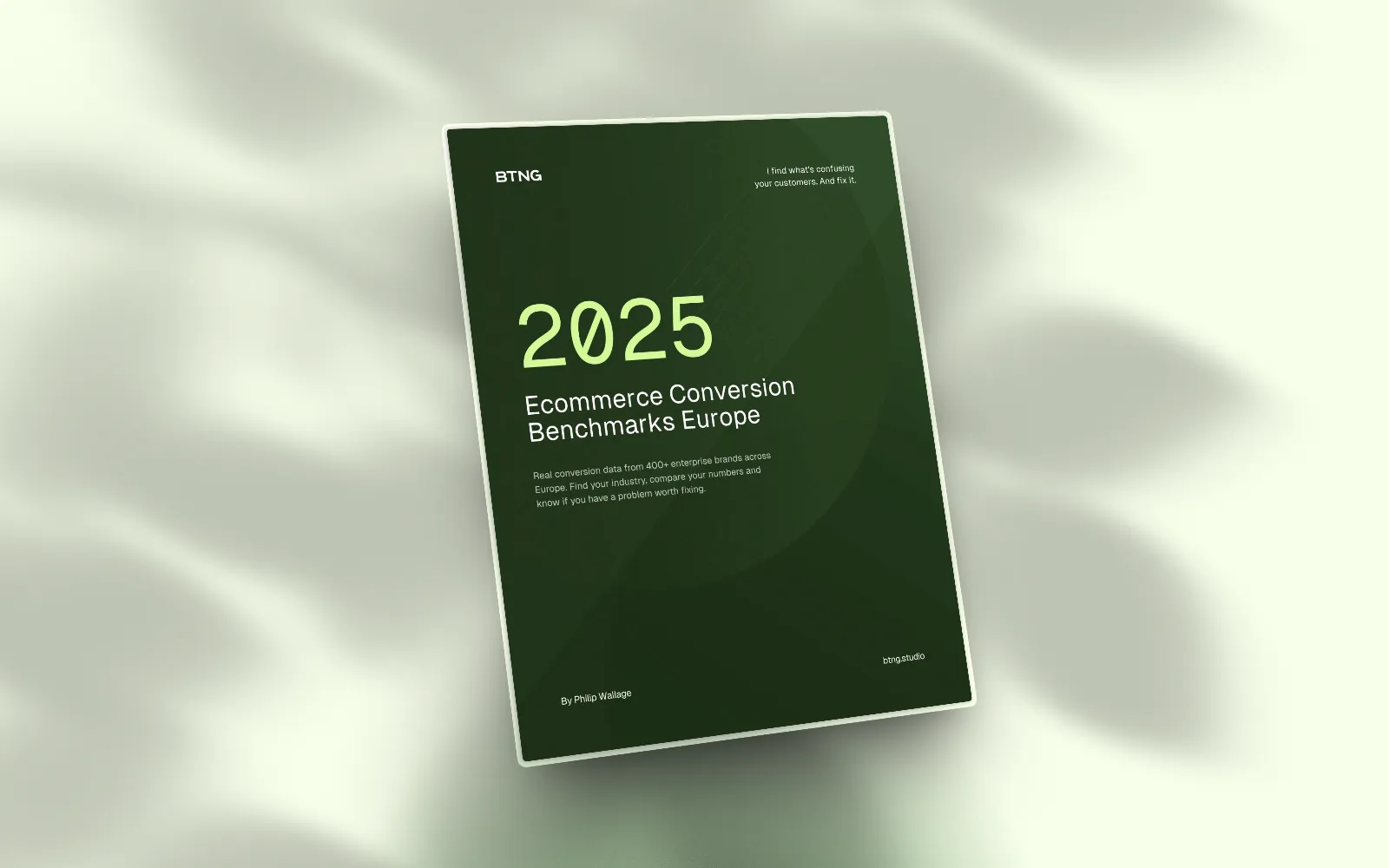
- Ecommerce Conversion Benchmarks Europe 2025 - the data your ideal customers are looking for
- Product Page Elements That Increase Sales - what drives purchase decisions once acquired customers land
- See how BTNG works with ecommerce brands